URL slug**
`xochitlia-garden-sun-woodblock-canvas`
**SEO description**
XOCHITLIA Garden of the Sun is a Japanese woodblock-inspired Mesoamerican canvas with carved-line detail, flowers, water, pyramid, and sacred landscape.
**Product description — English**
In Garden of the Sun, XOCHITLIA™ enters a visual language of carved contours, patterned textiles, stylized clouds, and disciplined color. Her flowing hair and flower headdress anchor a panoramic lake city filled with boats, temples, mountains, and botanical life.
The work is a respectful contemporary dialogue between Japanese woodblock structure and the original Mesoamerican mythology of TETLALIA. No decorative Japanese writing is used; the image communicates through line, pattern, landscape, and silhouette.
**Descripción — Español**
Garden of the Sun interpreta a XOCHITLIA™ mediante contornos tallados, textiles ornamentales, nubes estilizadas y color disciplinado. La obra establece un diálogo respetuoso entre la estructura visual del grabado japonés y la mitología mesoamericana original de TETLALIA, sin utilizar caracteres japoneses decorativos.
URL slug**
`xochitlia-garden-sun-woodblock-canvas`
**SEO description**
XOCHITLIA Garden of the Sun is a Japanese woodblock-inspired Mesoamerican canvas with carved-line detail, flowers, water, pyramid, and sacred landscape.
**Product description — English**
In Garden of the Sun, XOCHITLIA™ enters a visual language of carved contours, patterned textiles, stylized clouds, and disciplined color. Her flowing hair and flower headdress anchor a panoramic lake city filled with boats, temples, mountains, and botanical life.
The work is a respectful contemporary dialogue between Japanese woodblock structure and the original Mesoamerican mythology of TETLALIA. No decorative Japanese writing is used; the image communicates through line, pattern, landscape, and silhouette.
**Descripción — Español**
Garden of the Sun interpreta a XOCHITLIA™ mediante contornos tallados, textiles ornamentales, nubes estilizadas y color disciplinado. La obra establece un diálogo respetuoso entre la estructura visual del grabado japonés y la mitología mesoamericana original de TETLALIA, sin utilizar caracteres japoneses decorativos.
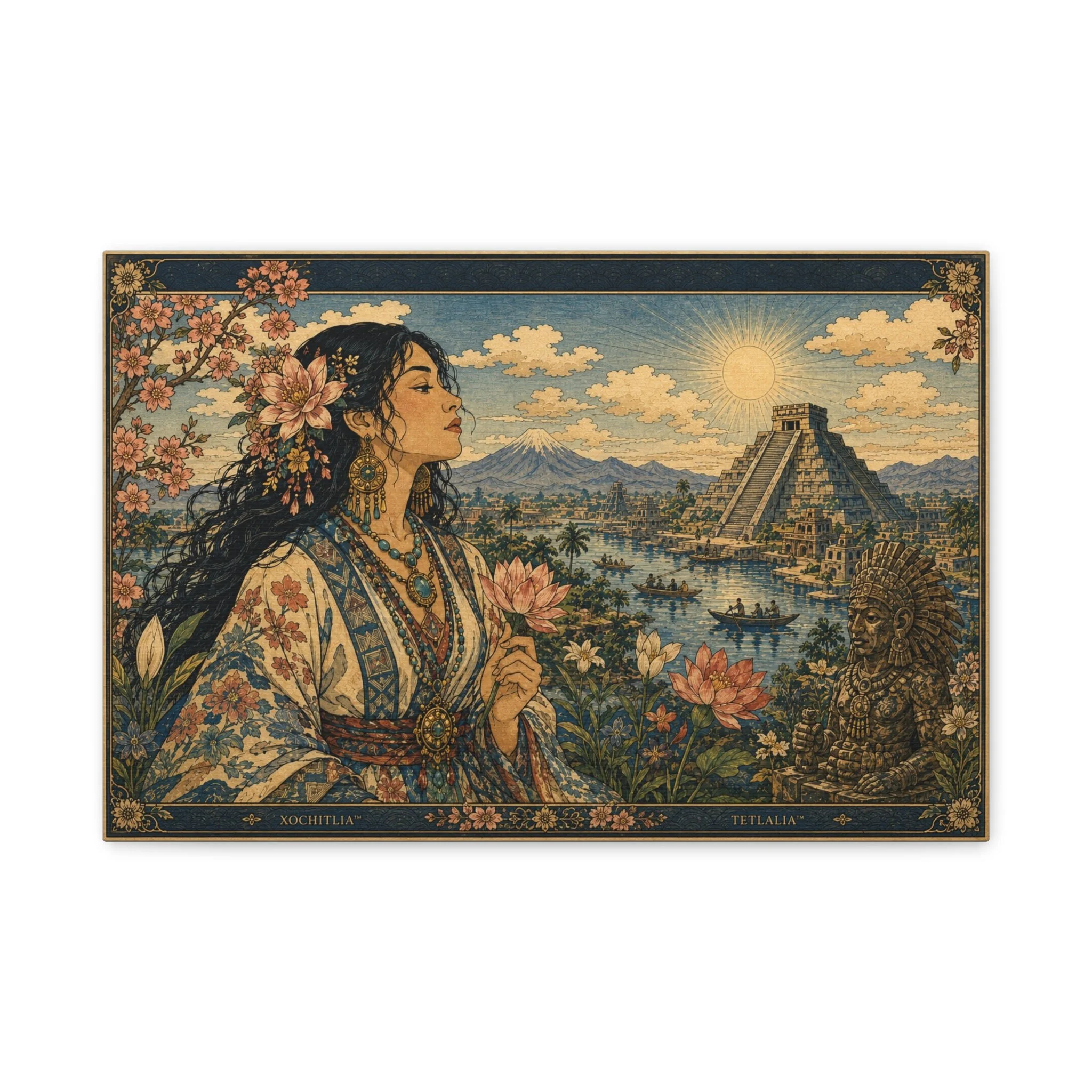 Image 1 of 15
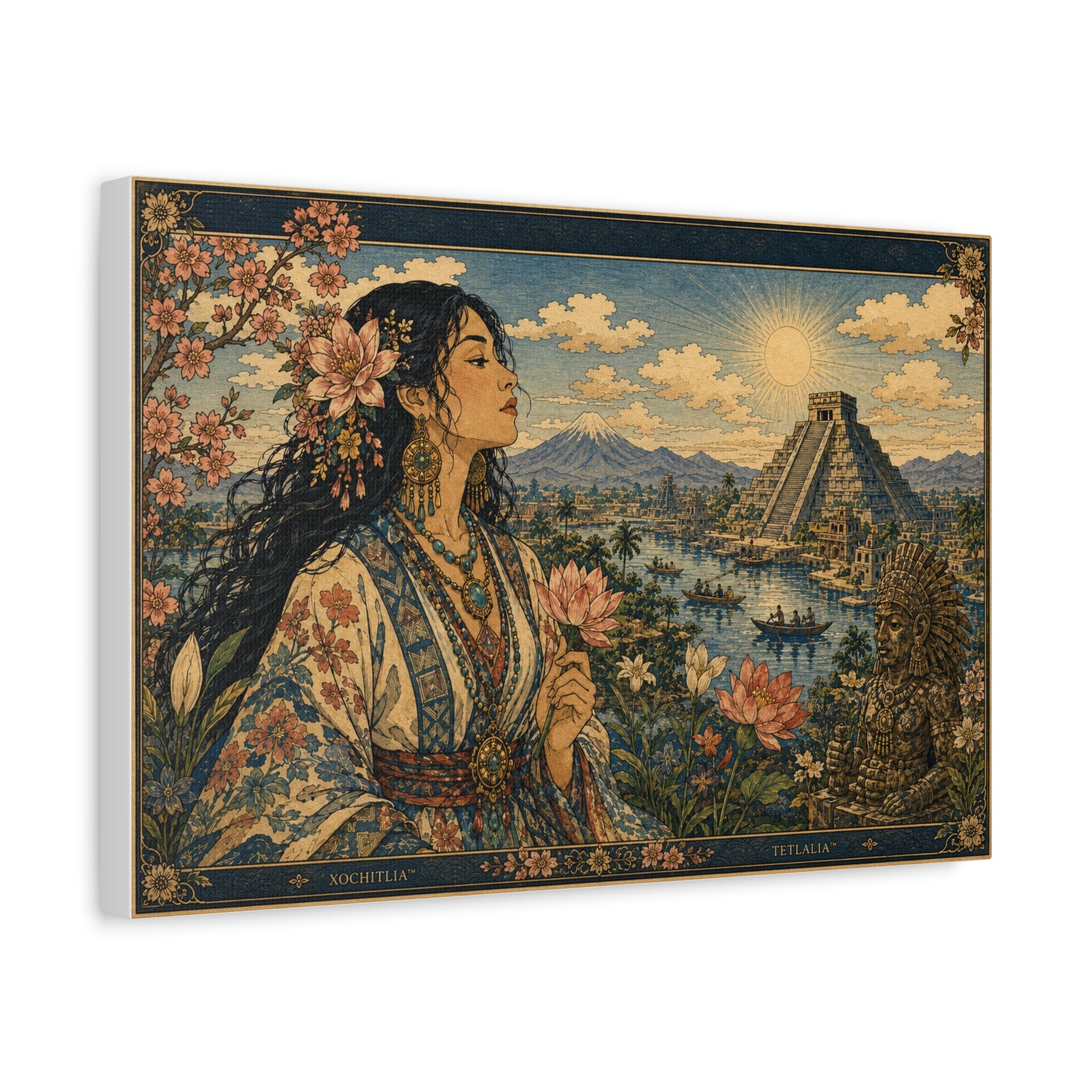 Image 2 of 15
 Image 3 of 15
 Image 4 of 15
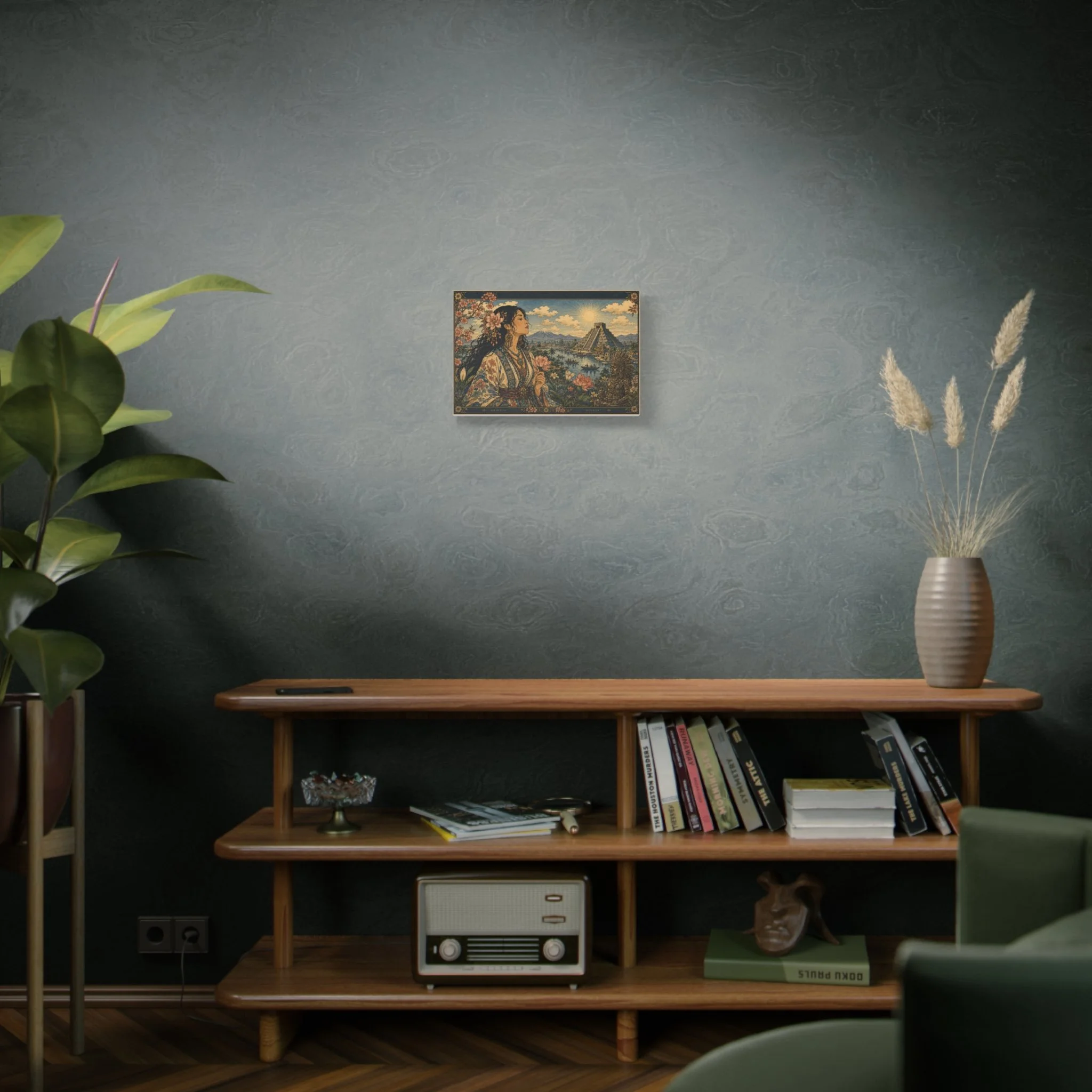 Image 5 of 15
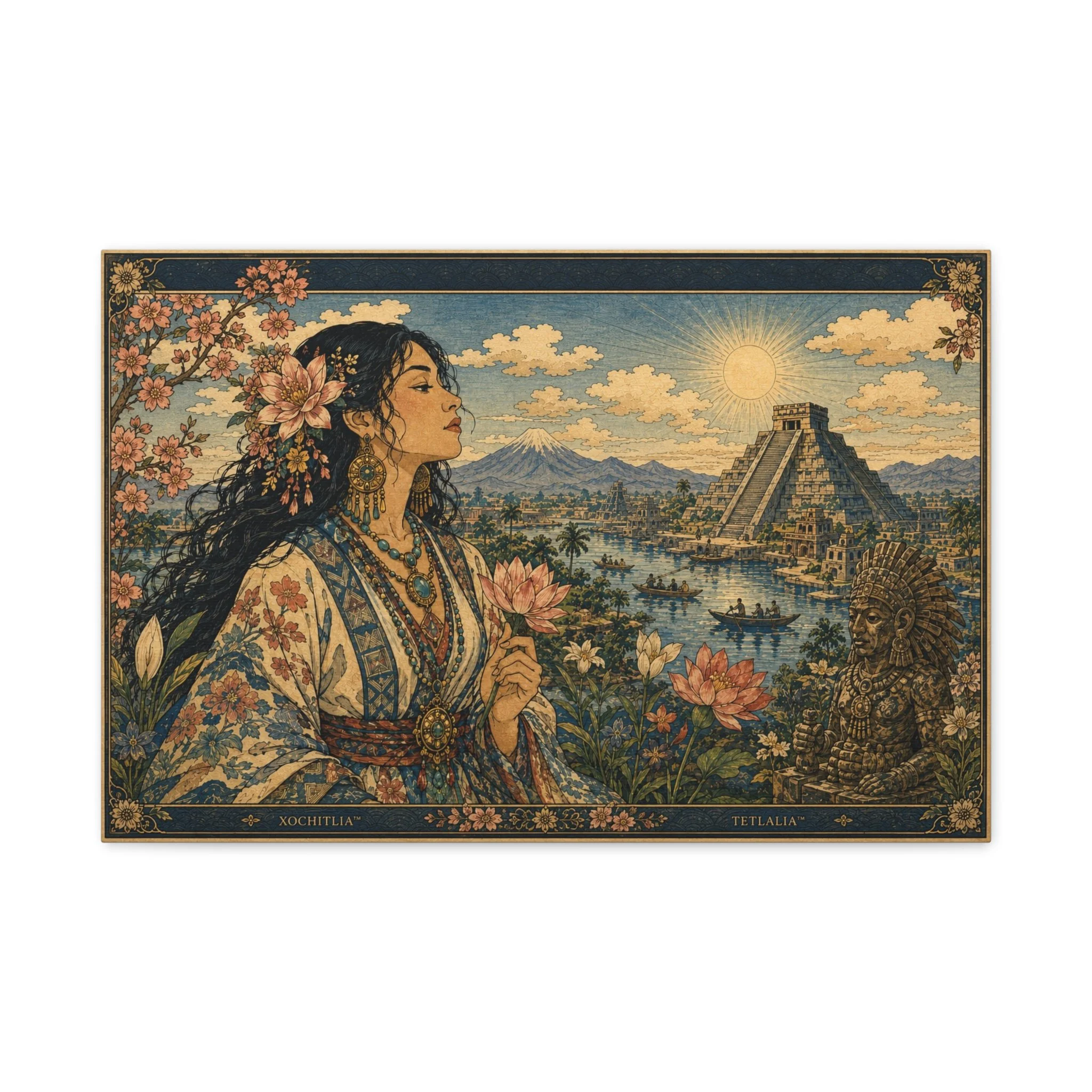 Image 6 of 15
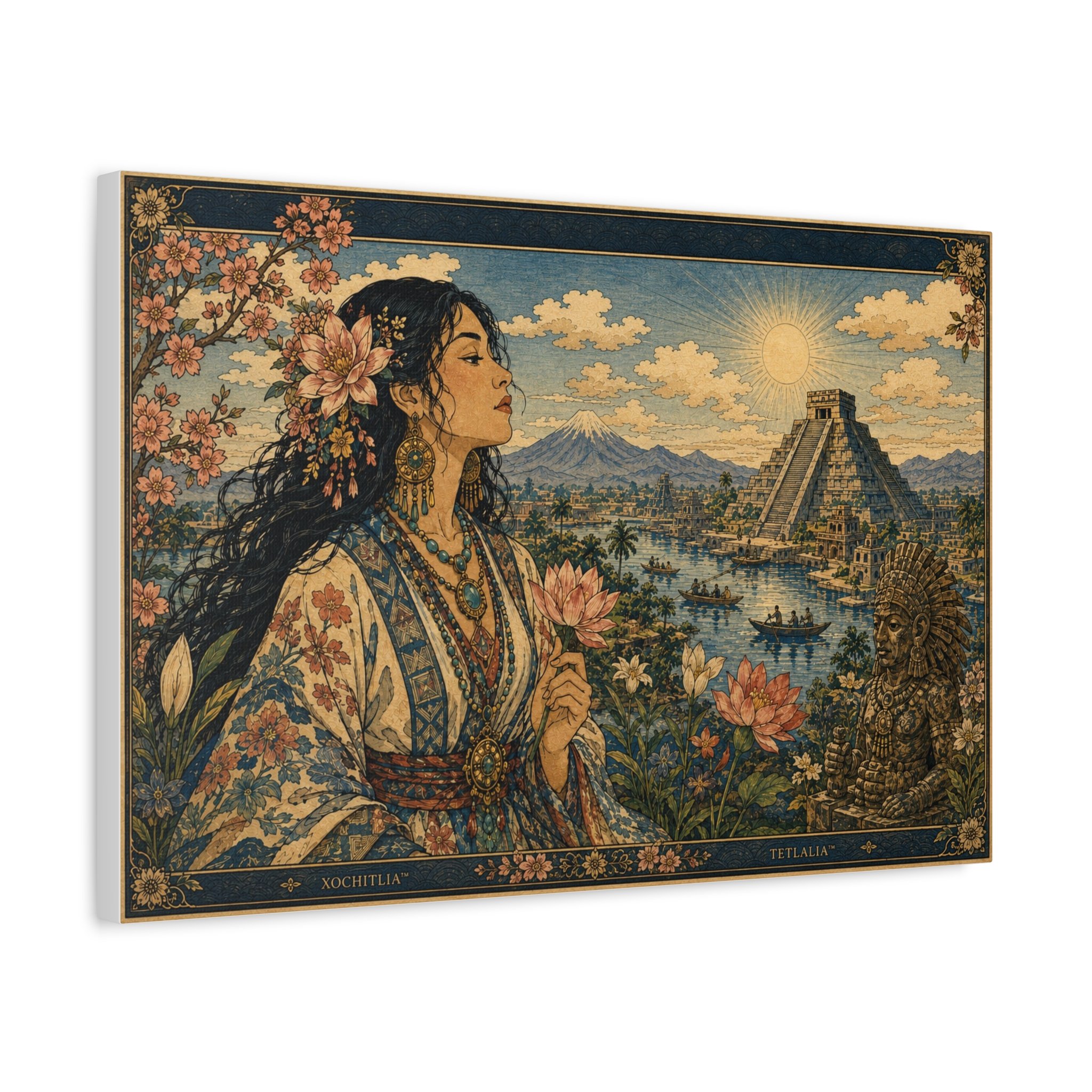 Image 7 of 15
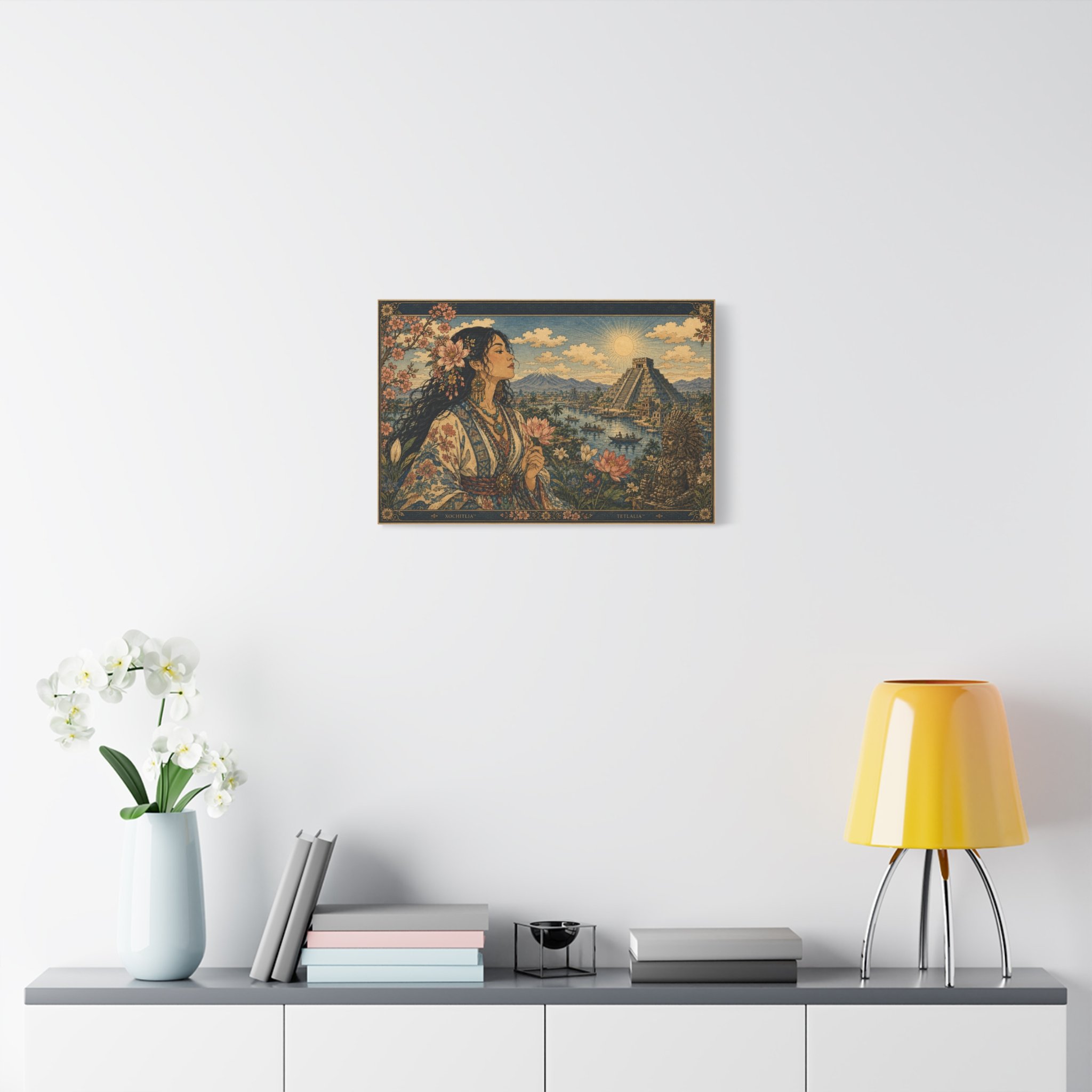 Image 8 of 15
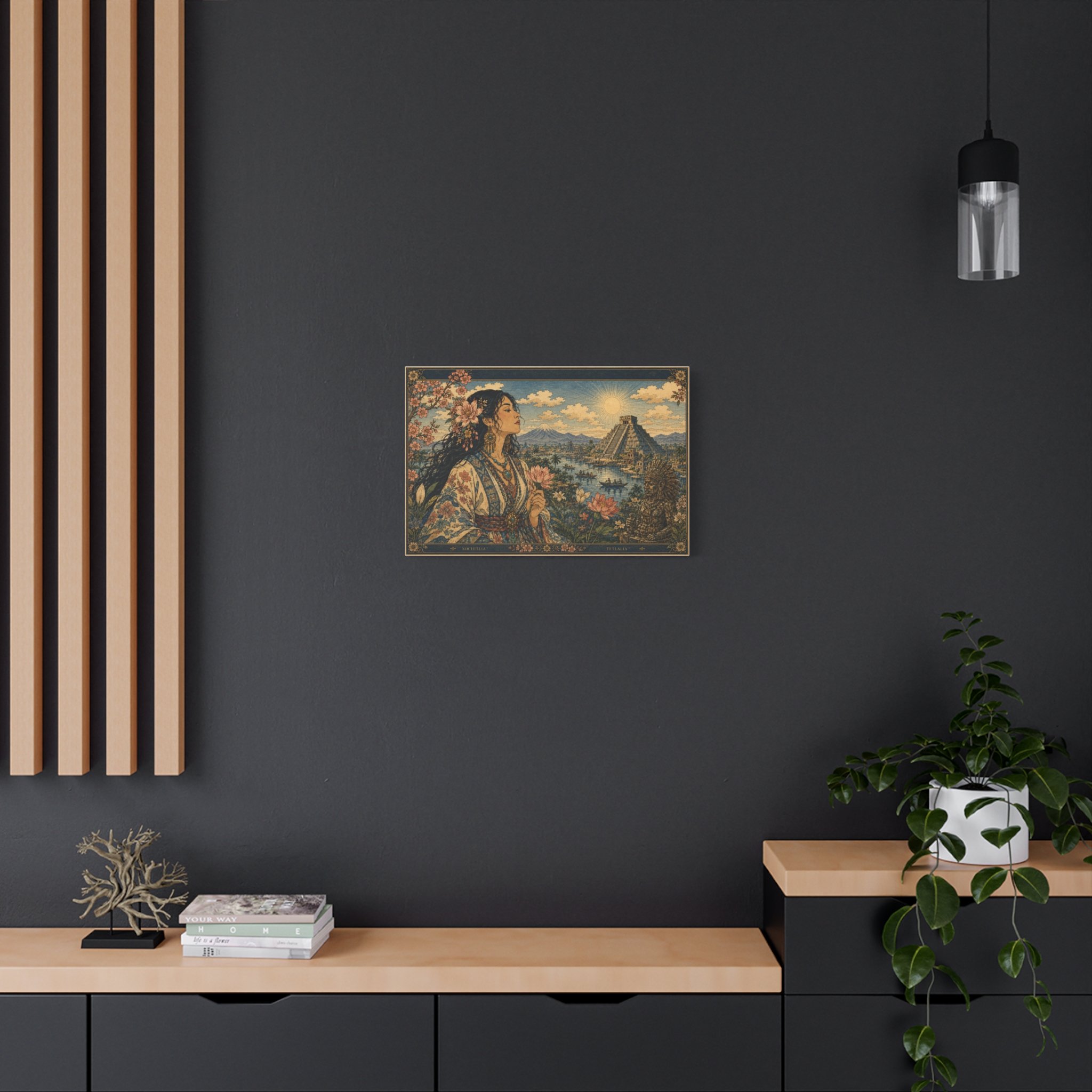 Image 9 of 15
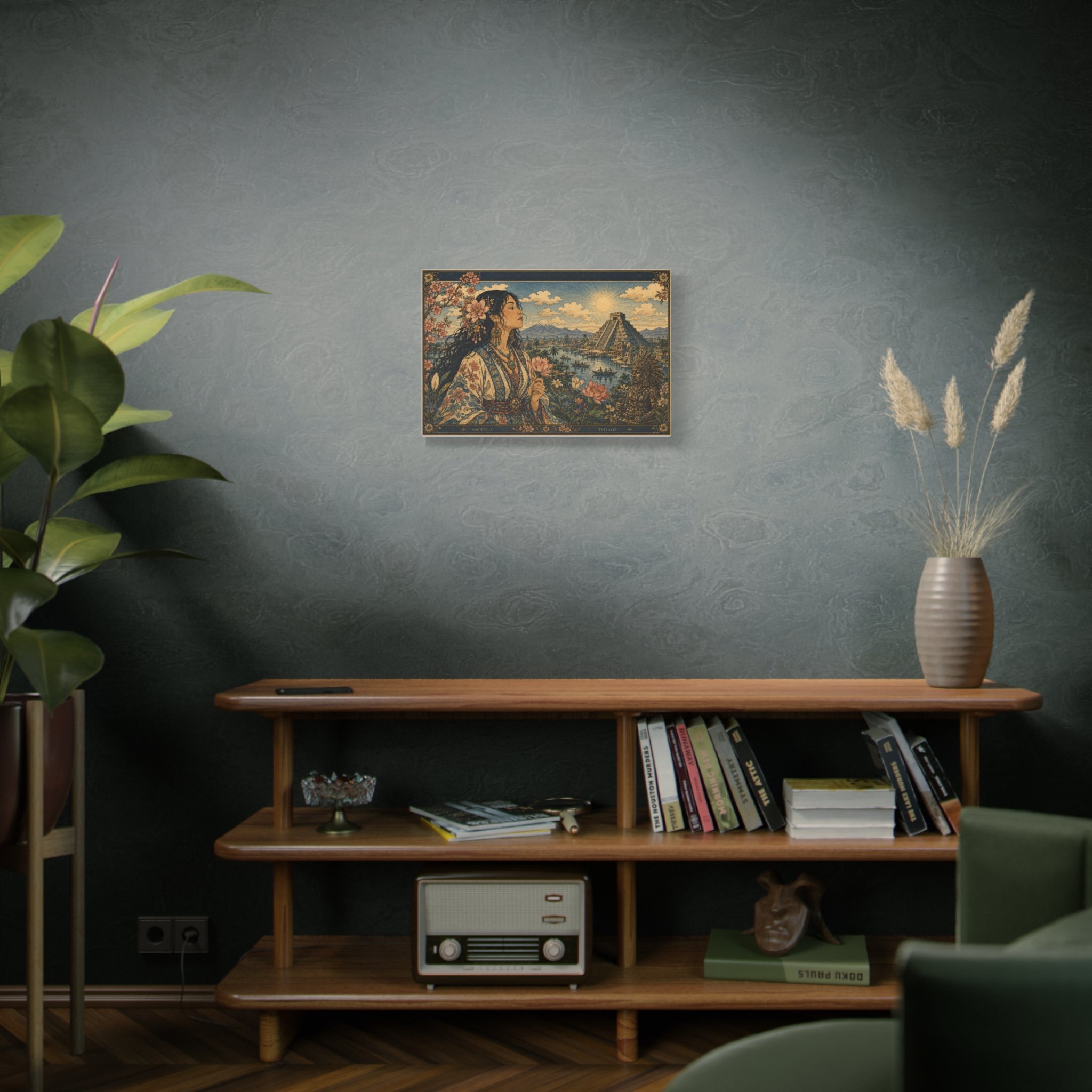 Image 10 of 15
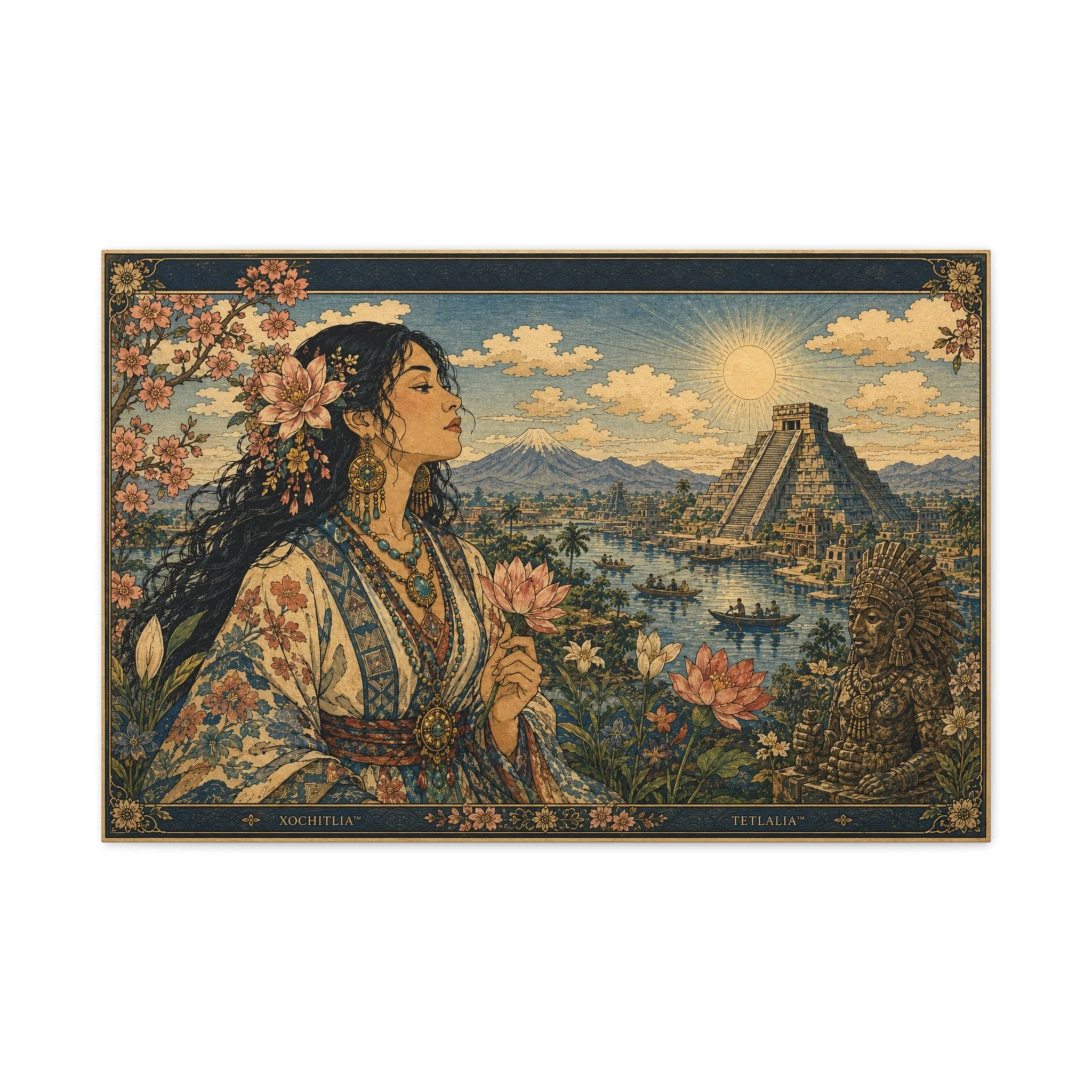 Image 11 of 15
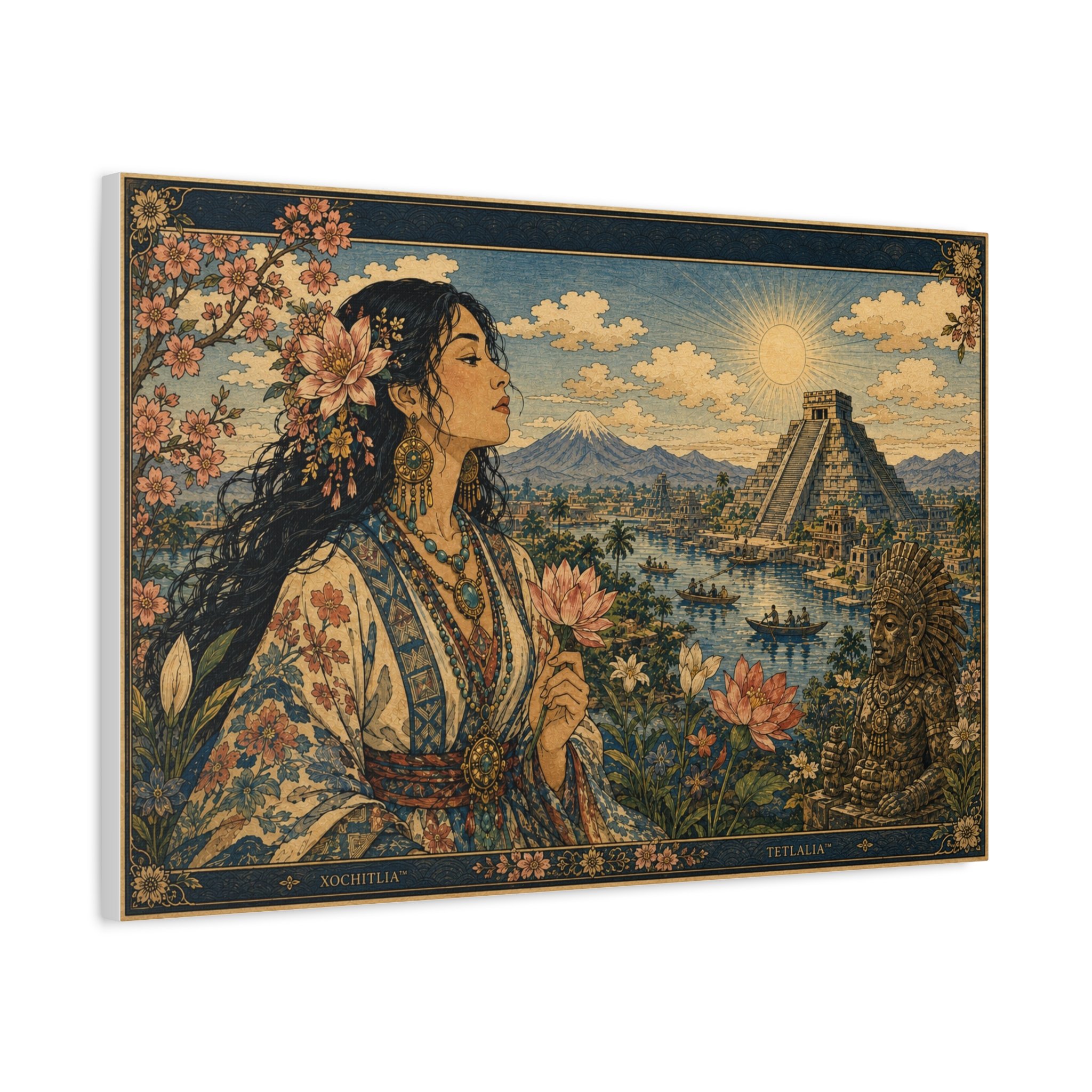 Image 12 of 15
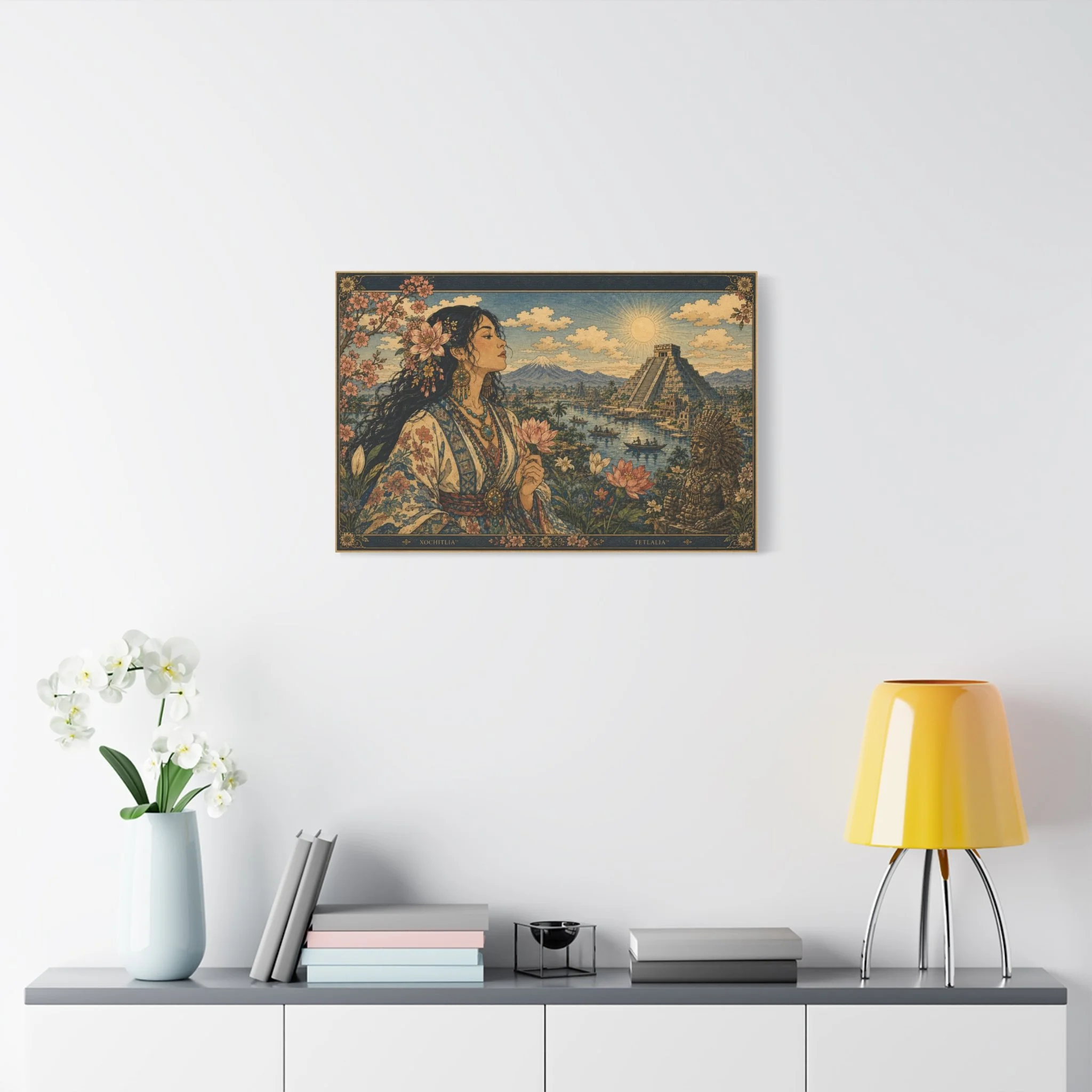 Image 13 of 15
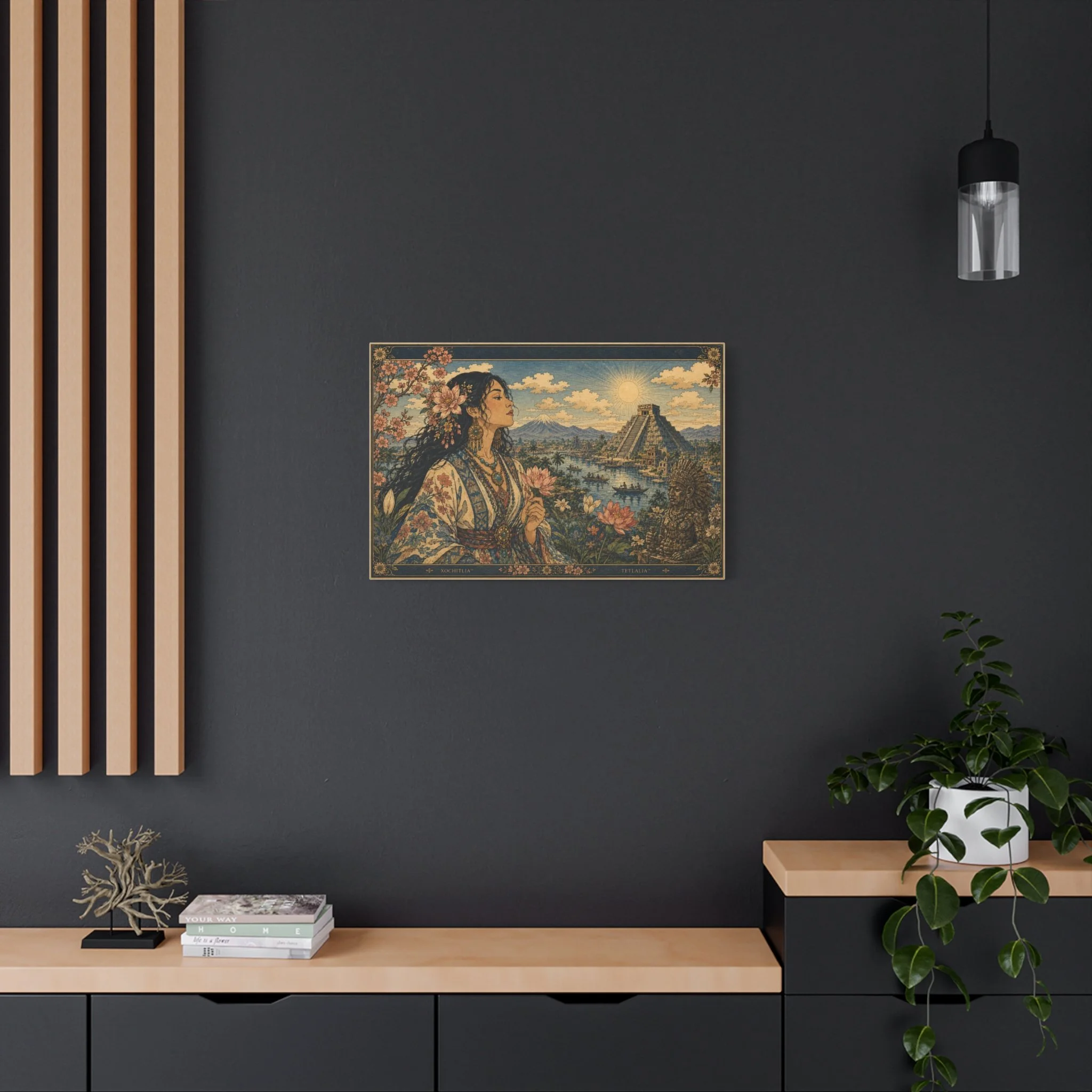 Image 14 of 15
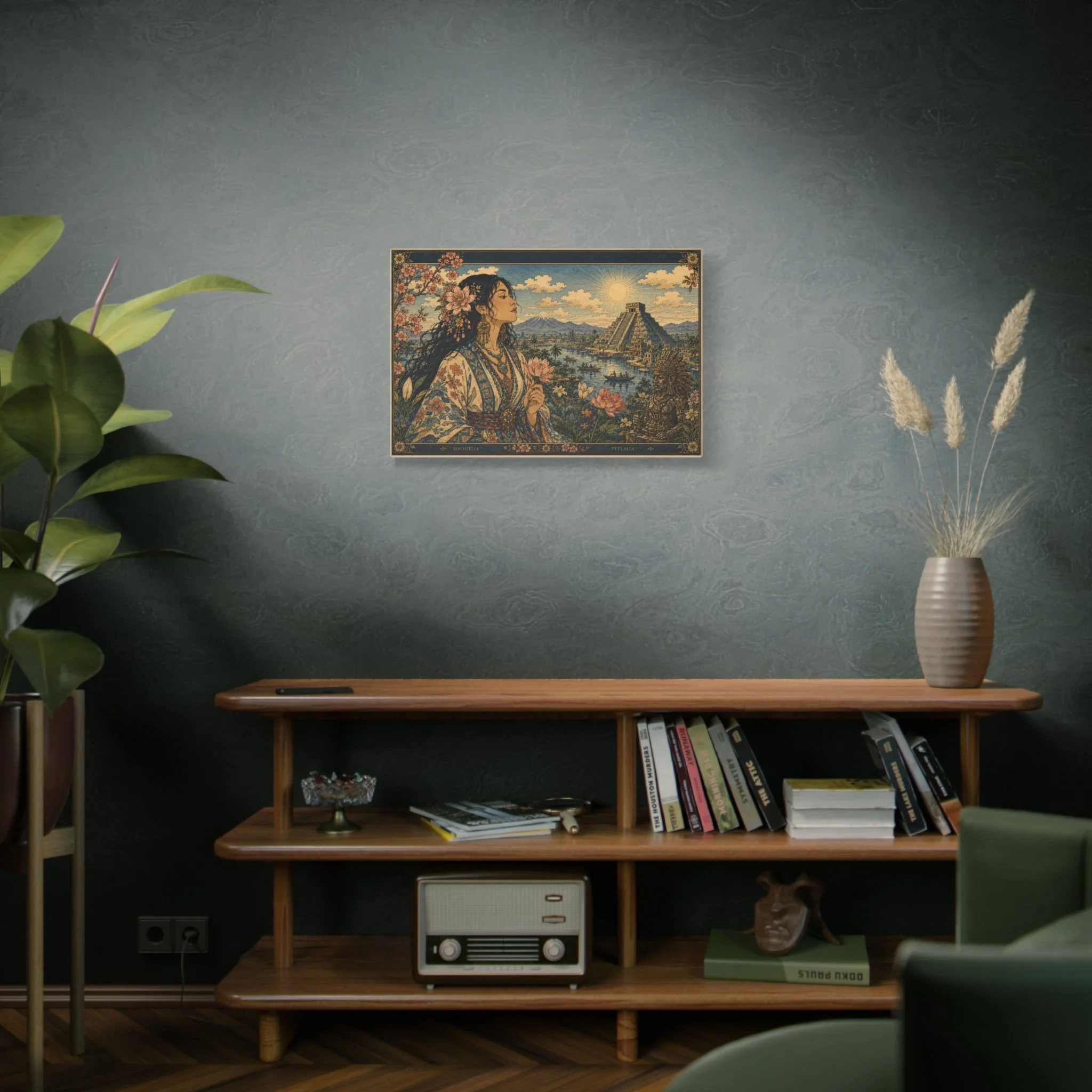 Image 15 of 15